
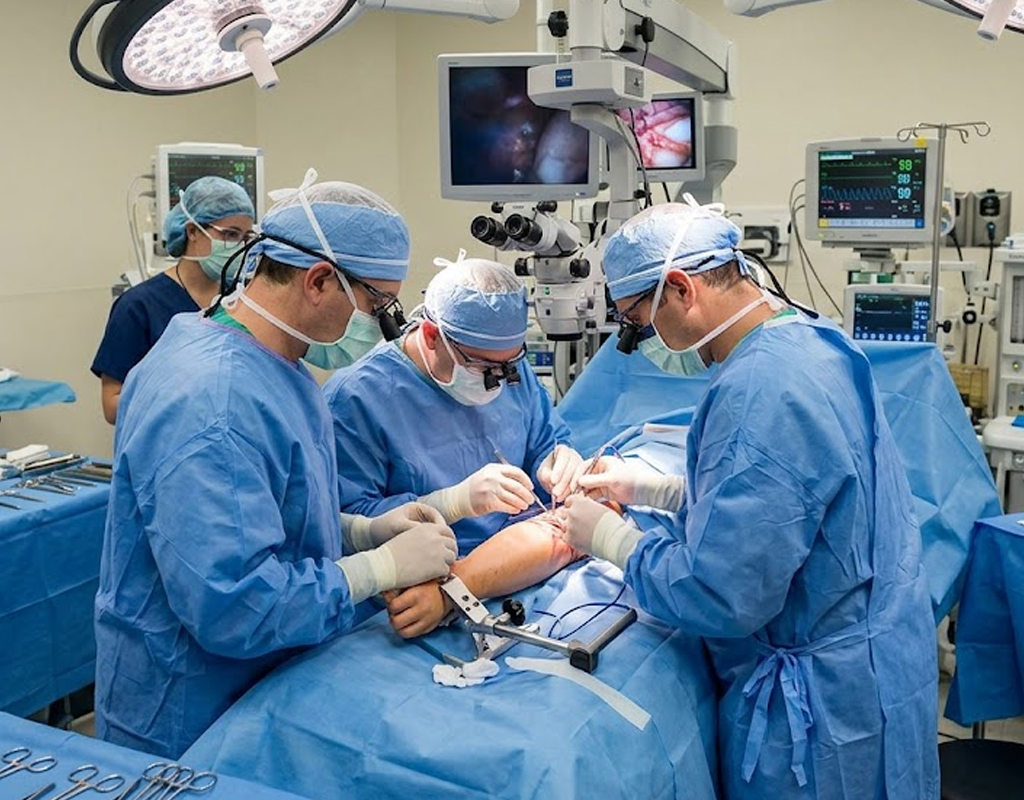
Severe facial loss can affect breathing, oral competence, speech, swallowing, eye protection, expression and social interaction. Advanced facial reconstruction aims to restore essential function first, then improve contour and appearance. Face transplantation may be considered only in rare circumstances when conventional reconstruction cannot adequately restore critical structures and the benefits justify lifelong immunosuppression.
Treatment may include scar release, skin grafts, local and regional flaps, microsurgical free flaps, vascularised bone reconstruction, nerve repair or transfer, eyelid and oral-competence reconstruction, fat grafting, cartilage grafts and staged refinements. Computer-assisted planning and patient-specific implants may be useful in selected skeletal defects.
Face transplantation is not conventional cosmetic surgery. Potential candidates undergo extensive surgical, medical, immunological, psychological, ethical and social assessment. The transplant centre evaluates the defect, previous reconstruction, functional disability, available donor tissue, adherence and the patient’s ability to manage lifelong immunosuppression and rehabilitation.
Risks include rejection, infection, medication toxicity, metabolic disease, malignancy risk, graft loss and major psychological adjustment. Appearance cannot be promised, and recovery of movement and sensation is variable. Long-term follow-up is essential.
Complex cases may require plastic and microsurgeons, head and neck surgeons, maxillofacial surgeons, oculoplastic surgeons, anaesthetists, transplant physicians, psychologists, speech and swallowing therapists, dental specialists and rehabilitation teams.
copyright © 2026, All rights reserved | Dr Saurabh Gupta