
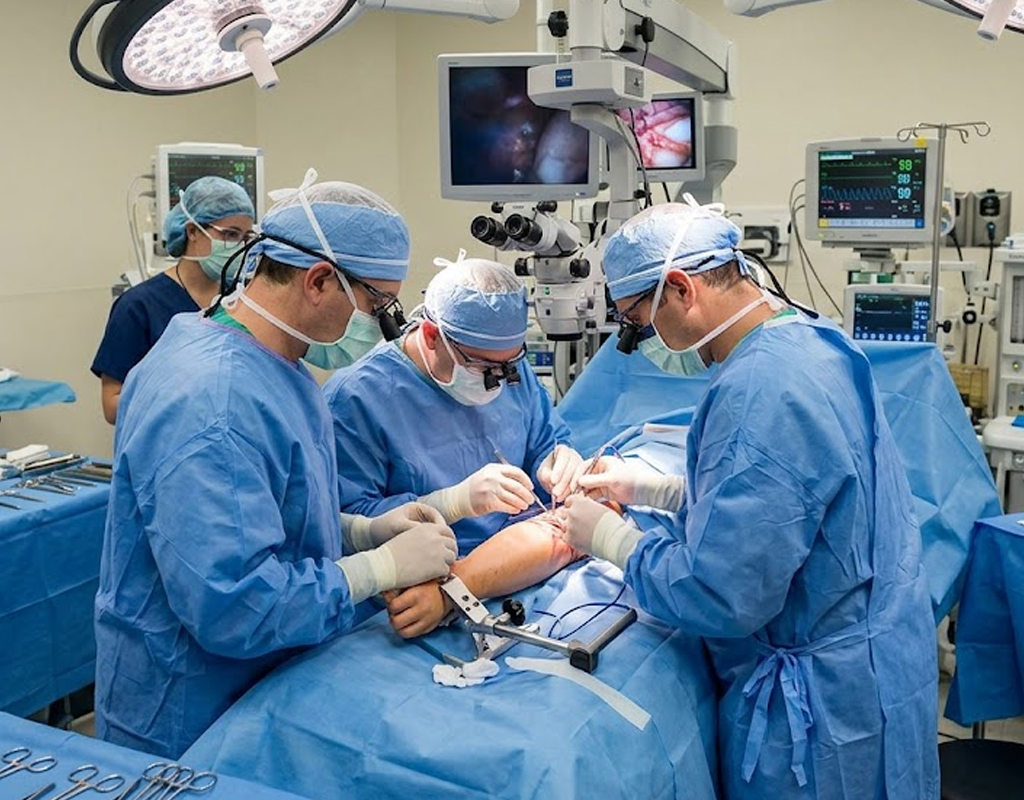
Primary bone tumours and cancers invading bone can create a dual challenge: achieving oncologic control and rebuilding a stable, covered and functional limb. Planning should occur in a multidisciplinary tumour setting with imaging, properly planned biopsy, pathology review and staging completed before definitive surgery.
The operation is based on tumour biology, anatomical compartment, imaging and response to systemic therapy where applicable. The biopsy tract must be planned so it can be removed with the tumour. The aim is an appropriate margin without unnecessary loss of uninvolved tissue; margin strategy is individual and pathology dependent.
Reconstruction may include modular or custom tumour prostheses, allograft or autograft, vascularised fibula transfer, bone transport in selected settings, joint fusion, tendon transfer, local or free flaps and vascular or nerve reconstruction. The choice depends on defect length, joint involvement, patient age, expected loading, soft-tissue condition, adjuvant treatment and infection risk.
Limb-sparing surgery is not appropriate when a durable oncologic resection and useful reconstruction cannot be achieved safely. Extensive contamination, uncontrolled infection, non-reconstructible neurovascular involvement or poor expected function may make amputation the better option.
Patients require pathology-based adjuvant planning, wound and reconstruction surveillance, structured rehabilitation and tumour follow-up. Implant complications, fracture, non-union, infection, recurrence and the need for revision surgery are discussed during consent.
copyright © 2026, All rights reserved | Dr Saurabh Gupta